Skin research, starting at the surface
MediSpa Peptides traces the passage through skin
A spa name suggests something happening on the surface. The copper-peptide experiments took me into a less familiar subject: the skin itself.
The skin-penetration experiment
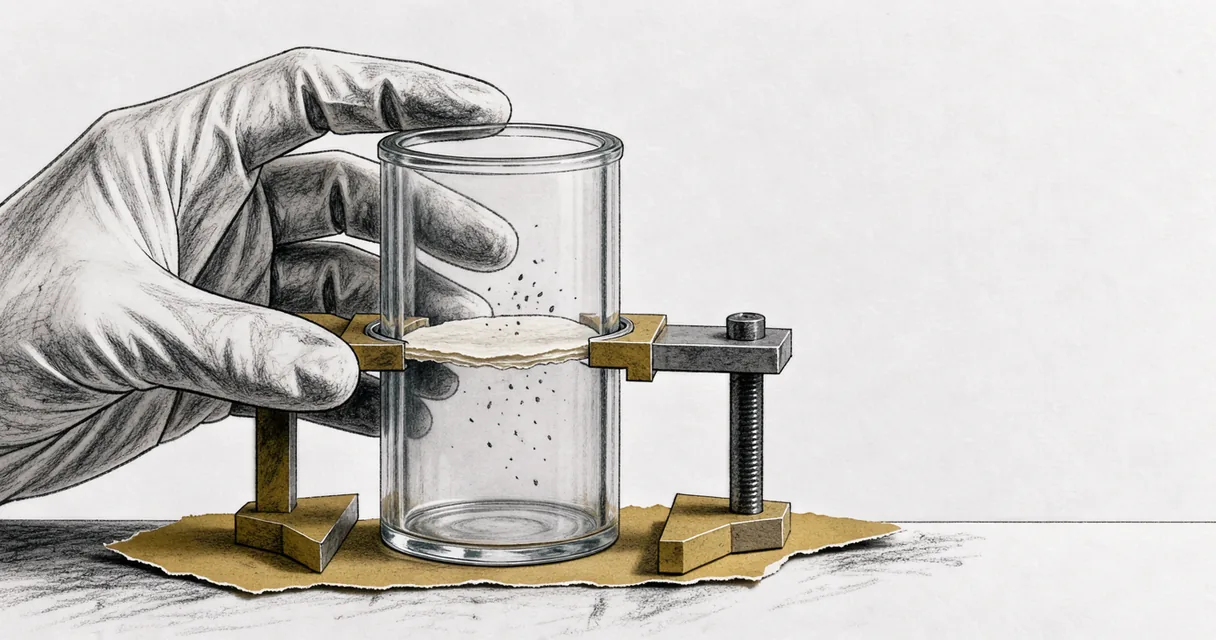
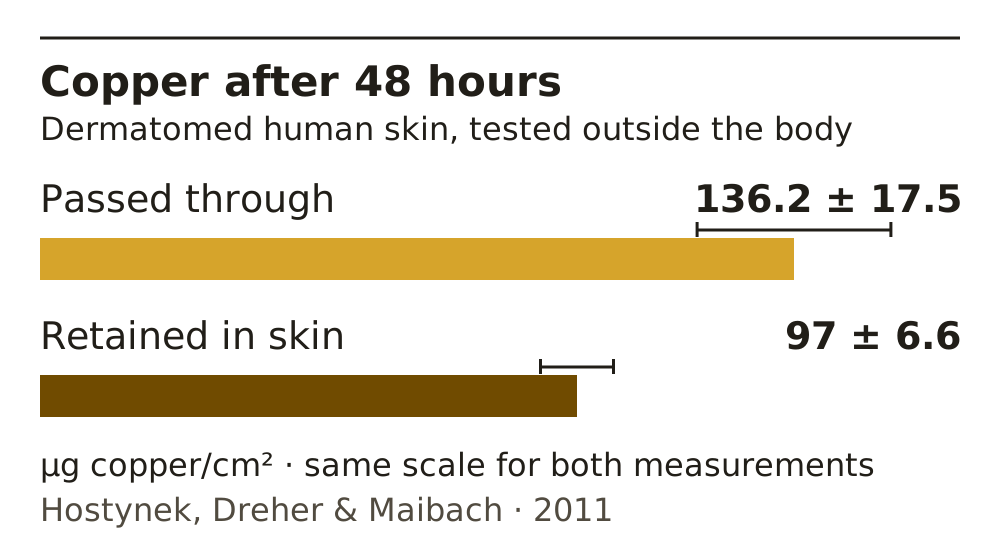
In a 2011 experiment with excised human skin, copper applied as GHK-Cu ended up in two places. Some passed through the prepared skin sample; some remained inside it. Over 48 hours, the dermatomed skin measurements were 136.2 ± 17.5 µg/cm² permeated and 97 ± 6.6 µg/cm² retained. Dermatomed means the skin was cut to a controlled depth for the laboratory test. The researchers measured copper, and the retained amount formed a dermal depot.
I prefer this rather unglamorous experiment to a sweeping claim about rejuvenation. It gives the ingredient a physical problem to solve and a measurement that can be checked. There is skin on the apparatus, rather than a face in an advertisement. What crosses a prepared sample and what improves living skin are separate questions; this paper answers the former.
Crossing intact skin
The outer skin barrier is useful precisely because it resists entry. The 2025 review of topical GHK delivery identifies poor permeability as a central obstacle and examines ways of changing the formulation or assisting passage. Its discussion includes palmitoylation, which adds a fatty group, and microneedle pretreatment. These are different experimental preparations, each with its own conditions.
That obstacle has become my favourite part of the copper-peptide story. A long list of cellular activities sounds complete until the ingredient has to reach those cells. The collagen findings were my initial reason for opening these papers. Now the unresolved questions are which skin layer a formulation reached, and how anyone established that.
GHK-Cu and the GLOW blend
GHK-Cu can stimulate collagen and other matrix components in the skin-repair literature. Its human evidence is largely from small topical studies. GLOW adds BPC-157 and TB-500 to GHK-Cu, bringing in research on vessels, tendons and wound repair, much of it in animals. The review covering all three constituents describes limited human safety evidence and the potential for serious harm; there are no controlled trials of the GLOW combination.
The two names therefore lead to different questions. In the topical GHK review the delivery problem is central; the site's GHK-Cu account follows the molecule from its plasma origins to the topical findings. The GLOW account begins with a rat wound and the parent protein behind TB-500. Preparation and route brings the two back together.
Cosmetic and systemic claims
Topical Copper Tripeptide-1 is a legal cosmetic ingredient. GHK-Cu has no FDA-approved therapeutic indication, and injectable or systemic use remains unapproved. GLOW likewise has no FDA-approved combination product. The small skin studies make the chemistry worth taking seriously; they leave a great deal to establish about effects elsewhere in the body.
I place careful formulation work above long lists of anti-aging pathways. Getting from a promising molecule to a useful skin preparation is a substantial piece of work. The skin barrier makes that work visible.